EN
EN  ID
ID 


Tukka, Tapanuli Tengah, December 18
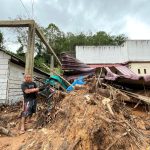
That morning, around seven o’clock, I was carrying out my usual activities at home. Suddenly, a loud noise came from outside. My neighbors and I rushed out to see what had happened. In front of my house, one of our neighbor’s homes had already collapsed due to a landslide. Without thinking twice, we immediately helped evacuate their family.
Less than ten minutes after we were outside, a far greater disaster struck. A massive landslide, accompanied by an extremely strong and heavy flow of water, swept through our settlement. In an instant, my house and many others collapsed simultaneously. Panic spread quickly. We gathered together, forming a small circle, holding on to one another to make sure no one was separated.
Amid the chaos, we were deeply grateful. Everyone happened to be outside—some were helping the neighbors whose house had collapsed, while others were watching what was happening—so no one was left inside their home. There were no casualties trapped under buildings or buried by the landslide. Surviving this disaster truly felt like the greatest blessing in the midst of tragedy.
That night, and the two nights that followed, were extremely frightening. We had no shelter, only the sky above us. Rain fell, the nights were dark and cold, and mosquitoes swarmed without mercy. Throughout the night, we took turns keeping watch, staying alert for the possibility of further landslides, and making sure everyone remained safe.
For two days, we relied solely on rice stored at the church—rice that had originally been prepared for Christmas celebrations. That was how we survived, sharing what little we had and strengthening one another amid severe limitations.
On the third day, my children and I gathered the courage to leave our settlement. The main road was still flooded, resembling a sea of water, and completely impassable. We tried to find another route through the forest. The path was steep and slippery. With great caution, I struggled to keep my children from slipping into the ravine. Every step felt heavy, but our hope of surviving and receiving assistance kept us moving forward.
Upon arriving at the evacuation site, we tried to seek help for food and clothing. Honestly, there was a sense of shame—it felt like begging. But I pushed those feelings aside for the sake of my children and other families, so that our presence would be known, and so others would understand that our area had been completely devastated and that we truly needed help.
My house was destroyed. The homes of other residents were destroyed as well. My Bentor only means of earning a living—was also crushed by debris and landslide material. Before this disaster, I worked every day as a bentor driver in the city of Sibolga. That was how my family survived. Now, all of it was gone in an instant.
I do not know how I will earn a living in the future. But there is one thing I am always grateful for: we survived. And as long as we are together and there is care and compassion from others, I believe we will find a way to rise again.
Story of Mr. Yusuf, one of the survivors in Tukka Sub-district (name has been changed).